
Tuesday, February 23, 2010
Human Powered flight
The preceding video is the result of a project done by the Department of Aeronautics and Astronautics at MIT. Several champion bicyclists took carefully designed ultralights and flew them for many hours. These ultralight airplanes were powered by human-driven propellers that moved in the same way that wheels move when humans pedal bicycles.
Ironically, the Wright brothers were bicycle shop owners before they constructed the Airplane. I would not be surprised that this idea did not cross their minds at some point. Before inventing the first airplane in 1903, they begin improving the designs of gliders made by Otto Lilienthal. I am sure that they pondered a "flying bicycle" at some point. But materials back then were much heavier and less durable.
The 21st century has seen many years of ultralight pilots and aircraft builders. If aviation and transportation is to become more green as people like, then this has a lot of potential that could be expanded with time and research.

Thursday, February 4, 2010
Radio Control Aircraft
Flying Radio Controlled Airplanes is a big hobby all over the world for children and adults, males and females. It allows a person to experience the thrill of controlling an aircraft. There are many different types of model aircraft, which perform in a variety of different ways. My father bought me a Tyco Jetstream airplane when I was about 10 years old...

I remember it being a very exciting experience. Flying it around involved many different skills, including...
I remember it being a very exciting experience. Flying it around involved many different skills, including...
- Learning to operate electronics.
- Learning to fix the plane when it broke during flight.
- The skill of replacing parts.
- Learning how the wind affects the plane in flight.
Then there was the point where I had destroyed the aircraft so much that it was unflyable. What did I do? I salvaged the engines and made my own body from paper, wood, duct tape, and played around until I got something that was flyable.
To this day, I still enjoy RC Aircraft of many different types, and commonly use them as teaching tools with students. Over the years, RC aircraft have become less expensive, more durable, and more electronically sophisticated. There are even flight simulators that help assist people with understanding how to fly the aircraft before flying them.
EDF jets are particularly fun to fly. They are inexpensive and generate a pretty good amount of thrust for the plane. These particular aircraft inspire me to look into furthering the technology of electric power in ultralight aircraft, as many people are already doing (which shall be the topic of some other post).
From a pedagogy perspective, RC Airplanes allow schools to start Aerospace programs. This allows for many schools to provide a child to learn about all of the key principles of Aeronautics without the costs that come from having real airplanes/helicopters.
Tuesday, February 2, 2010
Saturday, January 23, 2010
Patricia Mawuli Nyekodzi - Ghana's first woman to become a licensed ultralight pilot

Patricia Mawuli Nyekodzi recieved her Private Ultralight Pilot license last year on her 21st birthday. She is also a holder of the Rotax Engine Certification. She's a very gorgeous lady too. :)
Ghana and Ultralight Aircraft

Ghana's government has recognized the potential of ultralight aircraft and has created a license for flying them, which is called a "Private Ultralight Pilot" license. The Ghana Civil Aviation Authority, which is Ghana's version of our FAA, began issuing this license recently.
The organization WAASPS works closely with the Ghana Civil Aviation Authority and provides training for ultralight aircraft. They also provide crop dusting, aerial advertising, and airshows.
Ghana's GCAR Part 25 is very similar to the FAA's Light Sport Aircraft rule. It requires a pilot to have at least 30 hours of flight time, in which 10 of those hours must include solo flights.
This is very fascinating. There is a lot of potential for ultralights to help the continent of Africa build its infastructure. I hope that other African countries will duplicate this. It would certainly help with tourism, as well as with various different agricultural applications. And this seems to be what sets the GCAA apart from the FAA. The Ghanaians seem to have a clear understanding of how ultralights can further their economy down the road, whereas getting the FAA to create a license for flying ultralight aircraft was like pulling teeth.
Perhaps the commercial potential of ultralight aircraft should be the subject of another blog.
Thursday, January 21, 2010
Corporal Bullard's Airplane

The Lafayette Flying Corps used the S.P.A.D. VII during WWI. Here are some of the technical specs...
Armament: One Vickers .303-cal. machine guns
Engine: Hispano-Suiza 8-Aa of 180 hp
Maximum speed: 127 mph
Ceiling: 17,500 ft.
Span: 25 ft. 8 in.
Length: 20 ft. 3 in.
Height: 7 ft.
Weight: 1,550 lbs. maximum
Source: The National Museum of the Air Force
The S.P.A.D. VII was the most widely produced airplane during WWI. There were also other versions of this airplane that had slightly different technical specs.
The early days of air combat were up close and personal. There was no firing a missle at a target beyond visual range as today's F-22 pilots have the luxury to do. WWI fighter pilots had to fly in close to their targets and shoot a considerable amount of ammunition to bring their opponents down.
Pilots had to become skilled at Air Combat Manuvering, or "dogfighting."
The first black fighter pilot
Many people now know of the Tuskeege, and their long list of accomplishments over the skies of Europe during the second World War. The Tuskeege Airmen flew in the segregated 99th Pursuit Squadron and carried out several missions. By the end of WWII, they were the most requested squadron for bomber escort. When the United States Air Force became it's own seperate entity after World War II, segregation in the Armed forces had completely ended and fighter pilots of all races flew in the same squadrons.
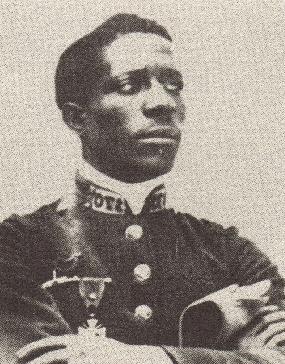
But the Tuskeege Airmen were not the first Black fighter pilots. There was at least one Black fighter pilot in World War One, which was known then as "The Great War."
A man by the name of Eugene Bullard, hailing from Columbus Georgia, was a fighter pilot for the French in World War One. Bullard was born in 1894. After growing up in [and tired of] the Jim Crow South, he caught a boat going to Scotland, and later found himself in France. Bullard made a good life for himself as a boxer and as a musician before the start of WWI. He and many other Americans flew as pilots for the Lafayette Flying Corps. His accomplishments in the Lafayette Flying Corps include flying over 20 combat missions and two confirmed kills.
The United States entered the war in 1917, and sought to recruit some of the Americans that were already flying for the Lafayette Flying Corps. Bullard passed the medical examination, but was denied the opportunity to fly for the United States Army Air Corps because of his skin color. Bullard would be transferred from the Lafayette Flying Corps to the French Infantry after getting into a fight with a French Officer.
When World War I ended, Bullard went back into his life as a socialite in Paris, France. Bullard was a Polymath: He was good at many things. But when Nazi Germany invaded France, he found himself on the run. He managed to escape France and return to the United States, were he was subjected to the brutal system of oppression that he had once escaped. He wad once beaten badly by an angry mob during the Peekskill riots.
Bullard never obtained the status that he once had in Europe. He died of stomach cancer in 1961.
But the Tuskeege Airmen were not the first Black fighter pilots. There was at least one Black fighter pilot in World War One, which was known then as "The Great War."
A man by the name of Eugene Bullard, hailing from Columbus Georgia, was a fighter pilot for the French in World War One. Bullard was born in 1894. After growing up in [and tired of] the Jim Crow South, he caught a boat going to Scotland, and later found himself in France. Bullard made a good life for himself as a boxer and as a musician before the start of WWI. He and many other Americans flew as pilots for the Lafayette Flying Corps. His accomplishments in the Lafayette Flying Corps include flying over 20 combat missions and two confirmed kills.
The United States entered the war in 1917, and sought to recruit some of the Americans that were already flying for the Lafayette Flying Corps. Bullard passed the medical examination, but was denied the opportunity to fly for the United States Army Air Corps because of his skin color. Bullard would be transferred from the Lafayette Flying Corps to the French Infantry after getting into a fight with a French Officer.
When World War I ended, Bullard went back into his life as a socialite in Paris, France. Bullard was a Polymath: He was good at many things. But when Nazi Germany invaded France, he found himself on the run. He managed to escape France and return to the United States, were he was subjected to the brutal system of oppression that he had once escaped. He wad once beaten badly by an angry mob during the Peekskill riots.
Bullard never obtained the status that he once had in Europe. He died of stomach cancer in 1961.
Subscribe to:
Posts (Atom)

